
Each year financial scams become more sophisticated and UK consumers are increasingly being approached by fraudsters via phone calls, text messages, emails and social media. It is no longer enough for scammers to use simple tricks since many of them now create convincing fake websites, copy real company information and employ high-pressure techniques which are able to catch even careful people by surprise. One of the best ways to keep your money safe is to understand how these scams function and to know the practical measures you can take to protect yourself.
The guide examines the most frequent financial scams currently taking place in the UK, shows you how to recognise them, and tells you precisely what to do if you believe you’ve been targeted — or even if you’ve already sent money.
Common Financial Scams
Scams usually belong to a number of identifiable types, including investment scams, banking and payment scams, pension scams, and impersonation scams in which fraudsters feign being a reputable organisation such as your bank, HMRC, or even the Financial Conduct Authority (FCA) itself. The thing that most of these scams have in common is a typical pattern: an unexpected contact, a sense of urgency, and a proposal or threat intended to get you to act before you’ve properly considered the situation. It is often more helpful to recognise this pattern than it is to try to remember all the different kinds of scam, since fraudsters always come up with new variations.
Fake Investment Opportunities
Scams involving investment often take place in what are known as “boiler rooms”, the fraudsters making cold calls or sending messages to people in order to sell them shares, bonds, or other kinds of investment which promise extremely high returns. A number of these scams make use of “clone firms” – imaginary companies that copy the name, the firm’s reference number, and even the website of an actual firm authorised by the FCA, although in some cases they alter only the phone number.
In other instances scammers use fake endorsements by celebrities or posts showing a luxurious way of life on social media in order to give an air of credibility to schemes relating to foreign exchange, contracts for difference, or cryptoassets. Whenever you are given an investment that promises very high returns with little or no risk, regard it as a warning sign not as a chance.
Fake Bank Messages
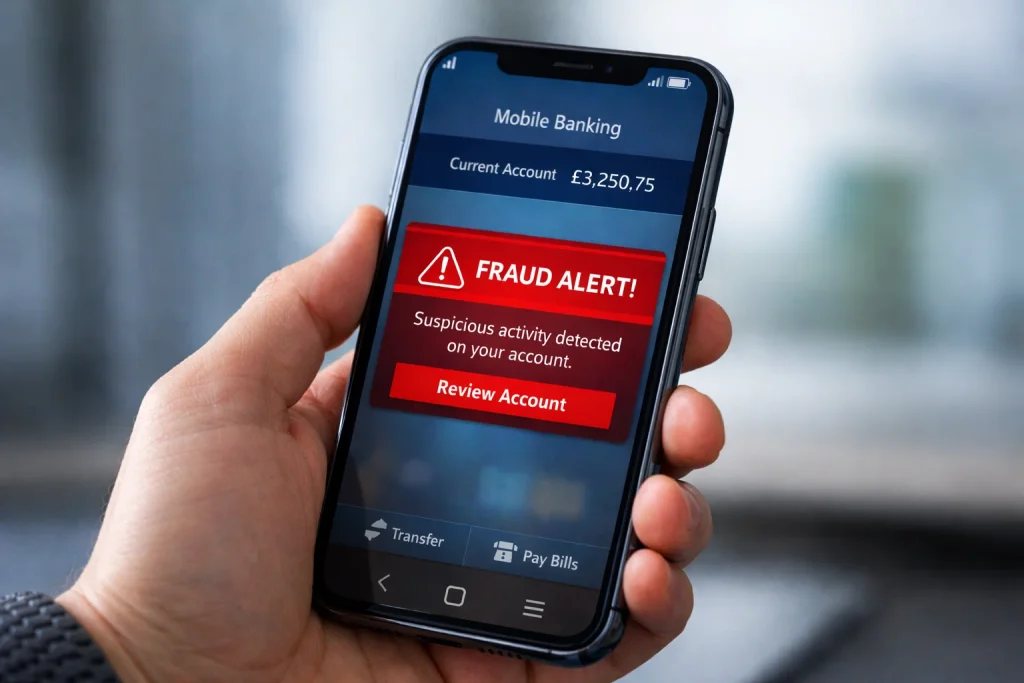
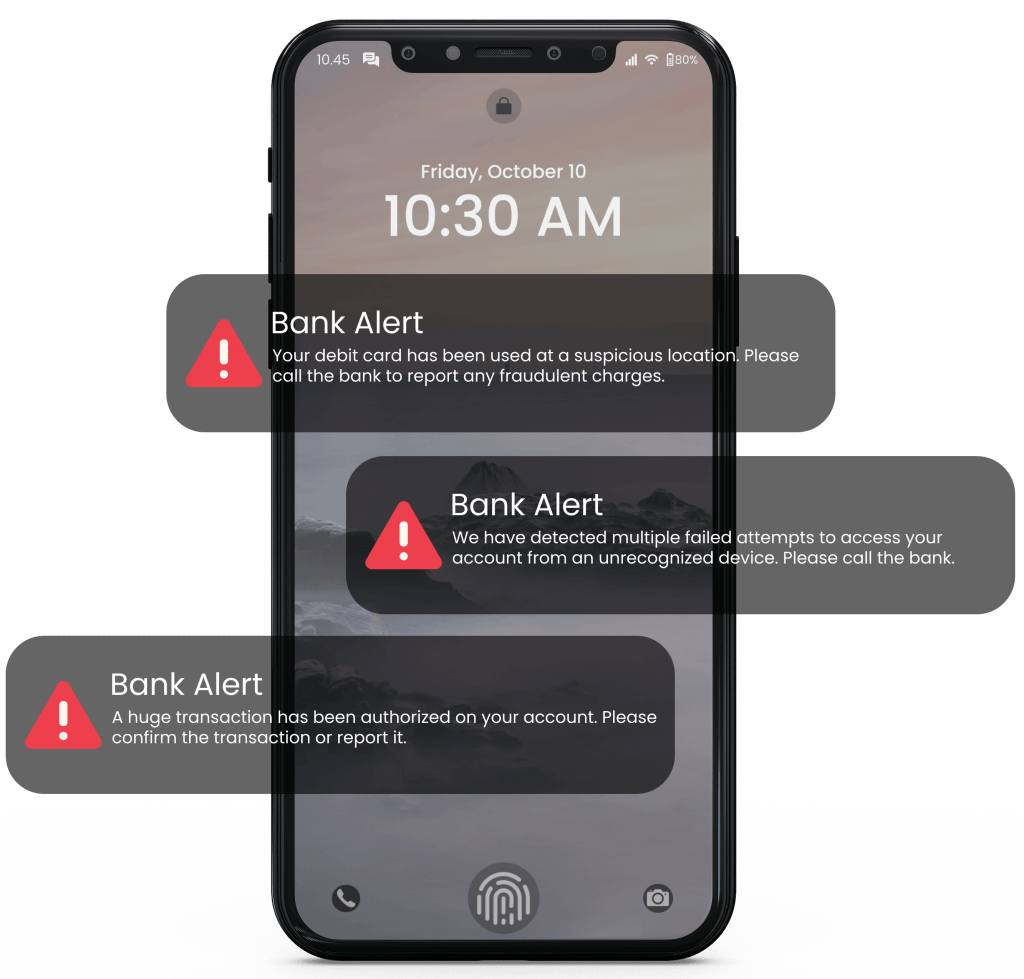
Scams involving the impersonation of a bank usually come in the form of a text message, an email, or a phone call, saying that there is some suspicious activity relating to your account and asking you to ‘verify’ your details or to transfer money to a ‘safe account’.
These messages tend to be exactly the same as real communications from your bank, including the logo and the name of the sender. It is never the case that a real bank will ask you to move money to a different account in order to ‘protect’ it, and they will never ask for your full PIN or your online banking password over the phone. If you get a message of this type, do not click on any links—instead, get in touch with your bank directly using the number on the back of your card.
Pension Scams
Pension fraud usually consists of unsolicited proposals aimed at helping you “release” or “unlock” your pension early, at merging your different pension accounts, or at investing your pension in some unusual high-return ventures such as overseas property, storage units or green energy projects.
In fact, it has been illegal since 2017 for companies to make cold calls to people regarding their pensions, so any unexpected telephone enquiry about your pension should at once cause you to suspect it’s a scam. When pension savings have been sent into a fraudulent scheme they are generally very hard – if not altogether impossible – to get back, which is why it is so important to exercise extra care in this situation.
Online Trading Scams
With the growing interest in cryptocurrency and forex trading, online trading scams have also increased quickly. Fraudulent operators create trading platforms that look very convincing, get people to make their first deposit, and usually display fake “profits” on the dashboard in order to gain the victim’s trust before asking for more money.
When the victims attempt to withdraw their funds, they are given excuses, told they have to pay extra “fees”, or the platform just vanishes altogether. Anyone who promotes a trading platform through unsolicited messages or social media advertisements, particularly if they promise guaranteed profits, should be treated with genuine caution.
Unexpected Calls and Emails
Most financial scams start with some kind of unsolicited contact—this could be a call, a text message, or an email that comes suddenly. The FCA recommends that consumers should be cautious about unexpected contact, the pressure to act immediately, and offers that seem far too good to be true, since all three of these features are present in the majority of financial scams.
When in doubt about whether the contact is genuine, the best course of action is to hang up or not to click on any links, and instead to get in touch with the organisation directly by using the information you have obtained on your own—not the one given in the message.
How to Check Whether a Financial Firm Is Authorised
You should use the FCA Firm Checker, which is a free online service that allows you to search for a firm or an individual and verify their registration status, before getting in touch with any financial firm. While checking a firm, it is important that the contact details and firm reference number (FRN) that have been given to you exactly match those shown on the Firm Checker—do not depend on the contact details provided by the firm itself, as fake firms frequently display false numbers that lead directly back to the scammer. If the firm does not appear in the list or if there is a discrepancy, you can telephone the FCA on 0800 111 6768 to confirm the information.
What to Do If You’ve Already Sent Money
If you have already sent money to a scammer then it is important to act quickly. You should immediately get in touch with your bank or payment provider and tell them what has occurred—since many banks have special fraud units it may be possible for them to stop or get the money back if you act promptly.
Make sure to keep copies of all the communications, the details of the transactions, and any documents connected with the scam because they will be required when you report the incident. It is also a good idea to change any passwords or PINs that might have been obtained by the scammer, and to keep a close watch on your accounts for any further suspicious activity.
Where to Report a Scam
In England, Wales and Northern Ireland, people who have been the victims of financial scams should report them to Report Fraud (the National Fraud and Cyber Crime reporting service). If you are based in Scotland, then you should report scams to Police Scotland by phoning 101 or to Advice Direct Scotland.
It is also possible to report suspected scams or unauthorised companies directly to the FCA. It’s not only useful for your own case since it helps the authorities to identify patterns and may allow them to prevent other people from becoming victims of the same scheme.
Conclusion
Financial scams in the UK keep on changing, but the warning signs are still very much the same unexpected contact, a rush to act quickly, and promises that seem far too good to be true. If you remain alert to these patterns, check the company up on the FCA Firm Checker before paying any money, and make sure you know who to get in touch with if there’s a problem, since this will greatly cut down your chance of being a victim. Whenever you’re unsure, stop and check independently and never let the pressure push you into making a financial decision without having properly considered it.
| Blog Section | Suggested Image Search Term |
|---|---|
| Intro / Hero Image | “online fraud alert phone” or “cyber security UK” |
| Common Financial Scams | “person looking at phone worried finance” |
| Fake Investment Opportunities | “stock trading laptop screen” |
| Fake Bank Messages | “mobile banking app notification” |
| Pension Scams | “elderly couple reviewing documents” |
| Online Trading Scams | “cryptocurrency trading chart” |
| Unexpected Calls and Emails | “phone call scam warning” |
| Checking Firm Authorisation | “magnifying glass documents verification” |
| Reporting a Scam | “person on laptop reporting online” |