
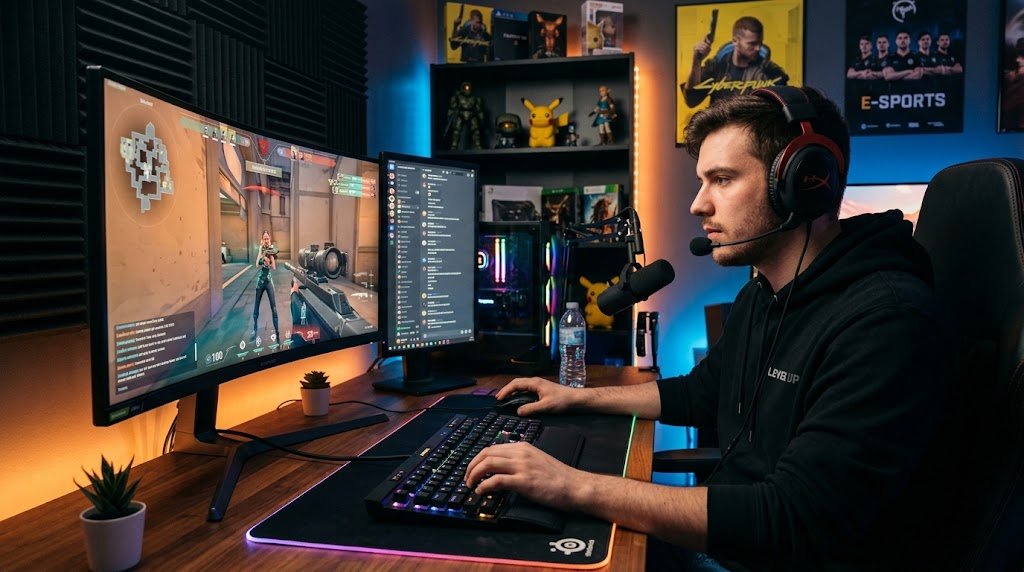
Every gamer wants to get better, but improvement rarely comes from simply playing more hours. Many players repeat the same habits for months, hoping that persistence alone will raise their rank or sharpen their aim. The players who progress fastest tend to approach the game with intention. They know which skills they need to develop, they practice those skills deliberately, and they review their performance honestly. This guide covers the core areas that shape player ability, including aim, reaction time, game sense, practice routine, and common mistakes, along with practical methods for improving each one.
Build Better Aim
Aim is a foundation skill in many genres, from first-person shooters to competitive battle arena and sports games. Good aim is less about raw talent and more about how well you control your mouse or stick. Start by making sure your sensitivity is comfortable. Many players change their settings constantly, which prevents their muscle memory from developing. Choose a sensitivity that lets you make a full horizontal turn with a comfortable arm movement, then keep it consistent for several weeks.
Aim training works best when it is focused and short. Aim trainers and practice maps let you isolate specific skills, such as tracking moving targets, flicking to stationary ones, and controlling recoil. Spend ten to fifteen minutes on targeted drills before a session, rather than an hour of random practice. Pay attention to your technique as well. Relaxing your grip, keeping your wrist and arm loose, and avoiding excessive tension in your shoulders often improves accuracy more than any new setting. Reviewing your recordings can reveal patterns, such as overcorrecting after a flick or pulling your crosshair too high.
Sharpen Your Reaction Time
Reaction time determines how quickly you respond to visual and audio cues, and it matters most in fast-paced games. Although reaction speed has a genetic component, players can improve how efficiently they process information. The key is anticipation. Skilled players spend less time reacting to what they see and more time predicting what will happen next, such as where an enemy is likely to peek or when a cooldown will end.
Practice recognizing common cues. Learn the sound of footsteps, reloads, ability activations, and objective changes so your brain registers them quickly. Reaction training games and simple exercises can help build the habit of responding to stimuli, but the most valuable improvement comes from playing with attention. Keep your eyes moving, scanning key areas of the screen instead of fixating on a single spot. Physical readiness also matters. Sleep, hydration, and short breaks keep your focus sharp, and playing while exhausted usually slows reactions noticeably.
Develop Game Sense
Game sense is the ability to understand what is happening in a match and make smart decisions. It includes map knowledge, timing, resource management, and awareness of your team and opponents. Two players with similar mechanical skill can perform very differently if one understands when to push, when to rotate, and when to hold back.
To build game sense, watch replays of your own matches and of skilled players in your game. Pay attention to decisions rather than only flashy plays. Ask yourself why a player chose a particular position, when they used their abilities, or why they retreated. Learn the maps thoroughly, including common routes, sightlines, objective timers, and areas where enemies tend to gather. Tracking economy or resources, whether that means gold, ammunition, or cooldowns, helps you plan ahead instead of reacting in the moment. Over time, these habits become instinct.
🎮 Gaming Skills Challenge
Test your reaction speed, accuracy and focus. Can you become a better player?
Ready Player?
Click the target as quickly as possible. You have 10 rounds. Your final score will measure your gaming performance.
Create an Effective Practice Routine
A practice routine gives your improvement structure. Without one, sessions drift toward casual play, which is enjoyable but rarely efficient for skill development. A useful approach is to divide each session into three parts: a warm-up, focused practice, and applied play.
Begin with a short warm-up of five to ten minutes using aim drills or simple exercises to prepare your hands and attention. Then spend the central part of your session working on one specific goal, such as improving your positioning on a particular map or practicing a difficult movement technique. Finish with regular matches where you apply what you practiced.
Consistency matters more than marathon sessions. Several shorter sessions across the week produce better retention than one exhausting weekend binge. Keep a simple log noting what you worked on, what felt difficult, and what improved. Setting specific targets, such as winning more duels with a certain weapon or reducing deaths in the early game, makes progress measurable. Revisit your goals every couple of weeks and adjust them when you reach them.
Identify and Fix Common Mistakes
Almost every player has habits that hold them back. Recognizing these habits is the first step toward correcting them. Common mistakes include overextending into unknown territory, chasing kills without considering the risk, peeking the same corner repeatedly, neglecting objectives, and failing to communicate. Some players also panic under pressure, making rushed decisions that a calmer approach would avoid.
One effective method is to review your deaths. For each one, ask what information you had, what you could have done differently, and whether the situation was avoidable. Patterns usually emerge quickly. If you keep dying in the same spot, your positioning may need work. If you lose fights you should have won, your aim or your timing might be the problem. Be honest with yourself, but avoid harsh self-criticism that drains motivation. Focus on one or two habits at a time so you can make real changes rather than trying to fix everything at once.
Learn From Others Without Copying Blindly
Watching skilled players can accelerate your growth, but it works best when you watch with purpose. Choose players whose playstyle matches your goals, and study how they move, communicate, and make decisions under pressure. Community guides, tutorial videos, and coaching resources can explain concepts clearly. Still, adapt what you learn to your own strengths and limitations rather than imitating every detail. A technique that works brilliantly for a professional may not suit your hand size, sensitivity, or role on the team.
Playing with better players is also valuable. Joining a stable group of teammates, practicing in a community, or asking for feedback on your recordings can reveal blind spots you cannot see on your own. Stay open to criticism that is constructive and specific, and thank teammates who take the time to help you improve.
Protect Your Motivation and Health
Improvement can feel slow, and plateaus are a normal part of learning. When progress stalls, change your practice focus, take a few days off, or try a different mode to refresh your perspective. Physical health supports performance, so maintain good posture, take regular breaks, stretch your hands and wrists, and keep your eyes rested. Gaming should remain enjoyable. If you find yourself dreading sessions, it may be time to adjust your goals or make room for other interests.
Conclusion
Becoming a better player is less about playing endlessly and more about playing with purpose. Strong aim comes from consistent settings and focused drills, while faster reactions grow from anticipation, attentive play, and good physical readiness.
Game sense develops as you study maps, review decisions, and track the flow of each match. A structured practice routine turns scattered sessions into steady progress, and honest review of your mistakes shows you exactly where to focus next. Combine these methods with patience and a willingness to learn from others, and you will see improvement that lasts. Every skilled player once struggled with the same basics you are working on today, and steady, deliberate practice is what separates them from those who stay stuck.